
A bad shopping cart can lead to customer complaints, safety problems, costly returns, and damage to your brand. Many quality issues don’t show up until the carts get to the stores. By following a systematic inspection process, you and your buyer can catch defects early and make sure you’re selling reliable, durable products.
A shopping cart quality inspection checks structural strength, welding quality, dimensions, wheel performance, load capacity, surface finish, safety features, and packaging condition. Inspectors make sure the carts meet design specifications, roll smoothly, hold the required loads, and have no defects before they ship. A thorough inspection helps manufacturers, importers, and retailers make sure the carts are safe, last a long time, and make customers happy.
Now let’s look at each step in the inspection process and the important things to check to make sure a Warenkorb is good quality.
Before conducting a quality inspection, it’s important to understand the design and construction of modern Einkaufswagen.
What Should Be Checked During a Shopping Cart Quality Inspection?
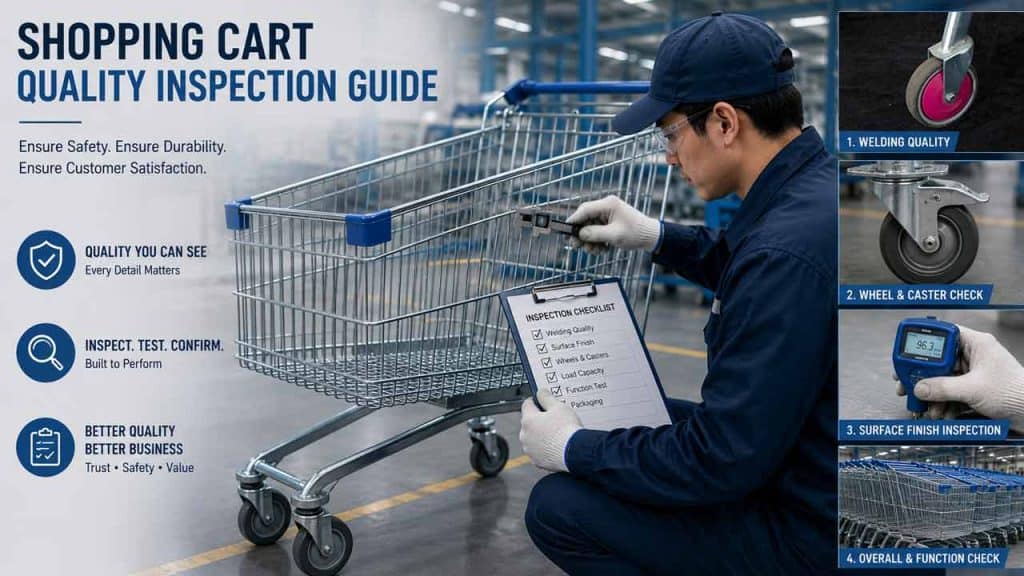
I always recommend using a shopping cart inspection checklist. It helps you be consistent and reduces the chance you’ll miss something important.
A typical inspection should cover:
- Product dimensions
- Material specifications
- Welding quality
- Surface coating quality
- Wheel and caster performance
- Load-bearing capability
- Safety features
- Packaging condition
- Quantity verification
Inspectors should compare the carts to the drawings, the specs, and the purchase order.
How Do You Inspect Shopping Cart Dimensions and Structure?
The first thing to do is make sure the cart you got matches the design you approved.
Inspectors should check:
- Overall length, width, and height
- Basket dimensions
- Handle height
- Child seat dimensions
- Base frame dimensions
- Wire diameters
- Tube dimensions
The frame should be straight and symmetrical.
Look for:
- Bent tubes
- Distorted baskets
- Uneven alignment
- Frame twisting
When you put a cart on the floor, it should sit flat and not rock.

What Welding Defects Should Inspectors Look For?
The way the cart is welded affects how strong it is and how long it will last.
Inspect all welded joints for:
- Cracks
- Porosity
- Burn-through
- Incomplete welds
- Missing weld points
- Excessive weld spatter
The welds should look smooth and even.
Inspectors also need to check for any sharp edges that could hurt customers or store employees.
If the welding is bad, the cart will break sooner and you’ll have to fix it more often.

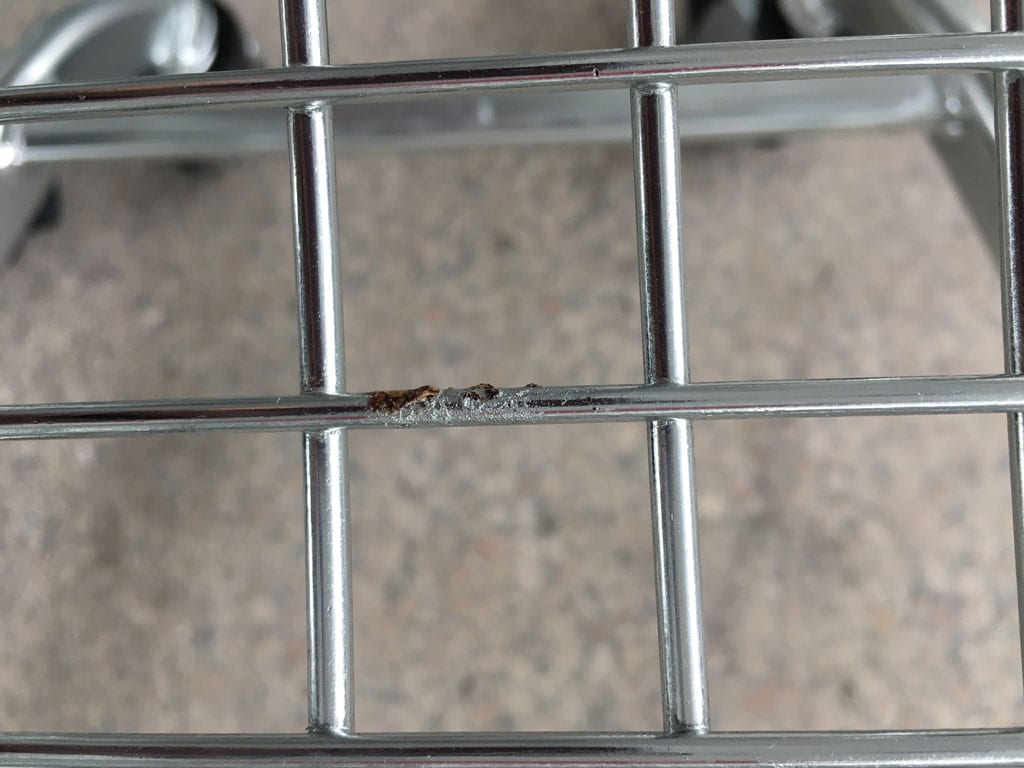
How Do You Evaluate the Surface Coating of a Shopping Cart?
Most carts are made of galvanized steel, have a powder coating, or both to keep them from rusting.
During inspection, check for:
- Scratches
- Peeling
- Chipping
- Uneven coating
- Rust spots
- Color inconsistencies
If the carts have a powder coating, inspectors might do a test to make sure the powder sticks to the steel.
If the carts are galvanized, the zinc coating should be even and there shouldn’t be any spots or other problems.
A good finish makes the cart last longer and look better.
How Do You Inspect Shopping Cart Wheels and Casters?
Checking the Einkaufswagenräder is one of the most important parts of inspecting a shopping cart.
Inspectors should verify:
- Smooth wheel rotation
- Proper swivel action
- Secure installation
- Wheel material quality
- Bearing performance
Push the cart across a flat surface to evaluate:
- Maneuverability
- Tracking performance
- Noise levels
- Vibration
The cart should roll smoothly and not wobble or pull to one side.
Good wheels make customers happy and save you money on repairs.
How Is Shopping Cart Load Capacity Tested?
Load testing proves the cart can hold the weight you want it to.
Two common methods are used:
Static Load Testing
You put weights in the basket and leave them there for a while.
Inspectors then check for:
- Permanent deformation
- Frame damage
- Weld failure
Dynamic Load Testing
You push the cart with the weights in it through a course.
Inspectors observe:
- Structural stability
- Wheel performance
- Frame integrity
- Joint strength
The cart should still work after you test it.
What Functional Tests Should Be Performed?
In addition to the structural tests, you need to make sure the cart works.
Key tests include:
Levelness Test
A levelness test checks whether the cart remains level on a flat surface, uneven wheel contact may cause the cart to fail the levelness test.
Cart Maneuverability
The cart should move easily in all directions.
Nesting Performance
Carts should nest smoothly without excessive force.
Child Seat Operation
The child seat should fold and lock properly.
Handle Strength
Handles should remain secure under normal use.
Brake Testing
If the cart locks, make sure the lock works.
When you test the cart, you’ll find things that you can’t see just by looking at it.

What Are the Most Common Shopping Cart Quality Defects?
During a pre-shipment inspection, I frequently encounter the following defects:
Critical Defects
- Sharp metal edges
- Structural cracks
- Wheel detachment
- Missing safety components
Major Defects
- Bent frames
- Poor welding
- Defective casters
- Significant coating damage
Minor Defects
- Small scratches
- Cosmetic imperfections
- Minor paint inconsistencies
You need to decide what defects are OK and what defects are not OK. (AQL).
How Should Shopping Carts Be Inspected Before Shipment?
The last time you can find problems is when you check the carts before they ship.
Inspectors should verify:
Quantity
- Cart count
- Model verification
- Color verification
Verpackung
- Cart protection
- Cart stacking
- Packaging materials
- Shipping labels
Documentation
- Test reports
- Inspection reports
- Product specifications
- Shipping documents
Container Loading
Inspect container conditions before loading:
- Sauberkeit
- Dryness
- Structural condition
If you pack the carts right, they won’t get messed up during shipping and your customers won’t complain.

What Inspection Standards Apply to Shopping Carts?
Different buyers want different things.
Common references include:
- Internal manufacturer specifications
- Retailer quality requirements
- Third-party inspection standards
- Product safety guidelines
- Customer-approved samples
Always use the latest version of the drawings and the specs.
If you have clear standards, everybody will test the carts the same way and you’ll know if you have a good product.
Shopping Cart Inspection Checklist
Use this quick shopping cart inspection checklist before approving shipment:
| Inspection Item | Checkpoint |
|---|---|
| Maße | Match approved specifications on drawings |
| Structure | No bending or deformation |
| Schweißen | No cracks or incomplete welds |
| Surface Finish | No rust, peeling, or scratches |
| Wheels & Casters | Smooth movement and rotation |
| Load Testing | Meets required capacity |
| Functionality | Proper nesting and operation |
| Safety Features | Child seat and handle secure |
| Verpackung | Adequate protection |
| Documentation | Complete and accurate |
Abschluss
If you inspect the carts the same way every time, you’ll find the problems before you sell them. That way, you’ll have fewer returns and people will like your brand. Whether you make the carts, buy them, or sell them, you need to check them to make sure they’re good.
What’s the first thing you’re going to check on your carts? Or, do you do something else to make sure your carts are good that I didn’t cover today?
Contact me if you want to talk about how to inspect shopping carts the right way or if you have questions.
