Sign up to get “Ultimate guide of shopfitting equipment product” E-book

the-most-useful-tips-for-purchasing-shopfittings-in-china-pic

SOMETHING YOU SHOULD KNOW

Applications of Two-tier Convenience Shopping Carts

What Are the Applications of Two-Tier Convenience Shopping Carts?

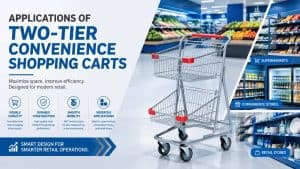
Running a successful retail store is about more than just having great products. The layout of your store, how easy it is for customers to shop, and the tools you give them to make shopping efficient all contribute to a great shopping experience. That’s why a lot of retailers are adding two-tier convenience shopping carts to their stores. They help you maximize your space and make your customers happy at the same time.  Two-tier convenience shopping carts are smaller shopping carts that have two levels of storage, allowing shoppers to carry more stuff while still being able to get around easily. They’re used in grocery stores, convenience stores, drug stores, and retail stores because they save floor space, make customers more comfortable, let them get more stuff, and help retailers create an efficient shopping environment. Even though convenience carts take up less space than full-size carts, they can hold a lot of stuff. They’re a great choice for retailers who want to improve how customers move through their stores without giving up valuable retail space.  What Is a Two-Tier Convenience Shopping Cart? A two-tier convenience shopping cart has two baskets stacked on top of each other. The top basket is for the stuff you get all the time, and the bottom basket is for the heavier or bigger stuff.  Unlike regular shopping carts, these carts are designed to be small, so they’re easy to push around in narrow aisles and smaller stores. They also nest together, so you can store more carts
Continue Reading »
Gondola Shelving VS Wall Shelving

Gondola Shelving Vs Wall Shelving

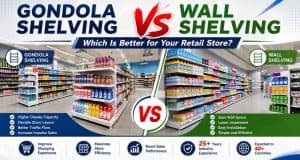
When you’re planning your store or supermarket layout, you may wonder if you should use gondola shelving or wall shelving. The wrong choice can waste floor space, reduce product visibility, and hurt your sales. You may also struggle with balancing your budget and the efficiency of your store. In this guide, I’ll break down both shelving systems in detail so you can decide which one to use based on cost, space optimization, merchandising strategy, and long-term return on investment.  Gondola shelving is a free-standing, flexible retail display system for high-traffic aisles. It’s double sided, scalable, and lets you see the product from both sides. Wall shelving is fixed along the walls of a store, focuses on using vertical space efficiently, and is cheaper to install. In most retail and supermarket layouts, gondola shelving maximizes product exposure and revenue per square meter, while wall shelving keeps costs down and organizes perimeter stock effectively. Gondola systems are better for flexible merchandising, while wall shelving is better for structural storage efficiency.  In the real world, these two systems don’t compete. They work together to create efficient, high-converting retail environments.  Gondola Shelving VS Wall Shelving What Is Gondola Shelving Used For In Retail Stores? You see gondola shelving in supermarket aisles, convenience stores, pharmacies, and big-box retail. Its main job is to create organized shopping lanes where people can walk down and look at stuff on both sides.  One of the biggest advantages is that you can put a lot of product on it.

Continue Reading »
Shopping Cart Coin Lock vs Wheel Lock System

Shopping Cart Coin Lock vs. Wheel Lock System

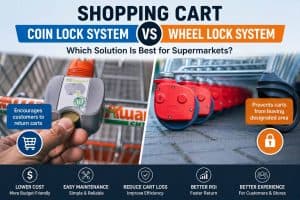
Lots of stores have trouble with shopping cart theft and the cost of getting them back. If you choose the wrong cart security system, you’ll just end up spending more money. By understanding the differences between coin locks and wheel lock systems, you can make a smarter investment for the long haul.  A coin lock system makes customers put a coin in the cart to get it out of the corral. A wheel lock system uses electronic technology to stop carts from leaving the area. Both systems reduce cart loss, but coin lock systems usually cost less to put in, are easier to maintain, and pay off faster, making them the best choice for many supermarkets. Which system is best? It depends on your store size, budget, and security needs. Here’s how they compare.  Various shopping Cart coin lock options for various needs What Is a Shopping Cart Coin Lock System? A coin lock system uses a mechanical locking device to connect shopping carts together. Customers put a coin or token in the cart to get it. When they bring it back and hook it up to the cart line, they get their coin back.  This simple process makes customers put carts back where they belong instead of having employees run all over the parking lot picking up carts.  Unlike electronic security systems, a coin lock is all mechanical. That means it’s reliable and easy to take care of.  A Wheel Lock System What Is a Shopping Cart Wheel Lock

Continue Reading »
Best Shopping Carts for Farm Stores

Best Shopping Carts for Farm Stores

Farm store owners often have trouble with carts that break under heavy loads, rust outside, or become difficult to move around in tight aisles. These problems increase costs and lower customer satisfaction. Picking the right shopping cart increases durability, safety, and long-term operational efficiency.  The best shopping carts for farm stores in the USA are heavy-duty metal or reinforced utility carts designed for high load capacity, rust resistance, and smooth movement on uneven floors. Industrial-grade retail carts usually support 200–330 lbs and are built for frequent use. While generic grocery carts like VersaCart-style models are common, farm stores do best with rugged, corrosion-resistant commercial carts such as RedSheep heavy-duty shopping carts made specifically for agricultural and rural retail environments. To choose the right cart, farm store owners must look closely at durability, capacity, materials, and layout requirements.  Why Do Farm Stores Need Heavy-Duty Shopping Carts? Farm stores aren’t like typical grocery stores. Customers often buy heavier items like feed bags, produce crates, fertilizer, and bulk goods. Lightweight carts break fast under this pressure.  Heavy-duty carts decrease replacement costs and enhance customer experience. According to retail equipment benchmarks, commercial carts last 3–5 times longer than consumer-grade alternatives.  Best Shopping Carts for Farm Stores What Type of Shopping Carts Work Best for Rural or Agricultural Stores? Farm stores do best with industrial metal carts or reinforced steel-wire baskets with powder-coated finishes.  Key options include: Full-size retail metal carts (best for heavy loads) Two-tier utility carts (best for mixed products) Foldable carts (only for light indoor

Continue Reading »
Shopping Cart Quality Inspection Guide

Shopping Cart Quality Inspection

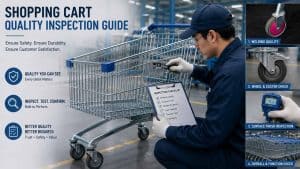
A bad shopping cart can lead to customer complaints, safety problems, costly returns, and damage to your brand. Many quality issues don’t show up until the carts get to the stores. By following a systematic inspection process, you and your buyer can catch defects early and make sure you’re selling reliable, durable products.  A shopping cart quality inspection checks structural strength, welding quality, dimensions, wheel performance, load capacity, surface finish, safety features, and packaging condition. Inspectors make sure the carts meet design specifications, roll smoothly, hold the required loads, and have no defects before they ship. A thorough inspection helps manufacturers, importers, and retailers make sure the carts are safe, last a long time, and make customers happy. Now let’s look at each step in the inspection process and the important things to check to make sure a shopping cart is good quality.  Before conducting a quality inspection, it’s important to understand the design and construction of modern shopping carts. What Should Be Checked During a Shopping Cart Quality Inspection? I always recommend using a shopping cart inspection checklist. It helps you be consistent and reduces the chance you’ll miss something important.  A typical inspection should cover: Product dimensions Material specifications Welding quality Surface coating quality Wheel and caster performance Load-bearing capability Safety features Packaging condition Quantity verification Inspectors should compare the carts to the drawings, the specs, and the purchase order.  Shopping Cart Quality Inspection Guide How Do You Inspect Shopping Cart Dimensions and Structure? The first thing to

Continue Reading »
Why Retailers are Switching to Plastic Shopping Carts

Why Are Retailers Switching to Plastic Shopping Carts

Metal shopping carts have been the go-to for retailers for years, but they come with some ongoing problems. Rust, expensive repairs, cart theft, and accidental vehicle damage can all add up to increased costs over time. That’s why many retailers are turning to plastic shopping carts as a modern and practical solution.  Retailers are making the switch to plastic shopping carts because they are lighter, easier to push, resistant to rust, cheaper to maintain, and less appealing to scrap-metal thieves. Plastic carts can also decrease damage to vehicles and store fixtures while offering better branding opportunities and supporting sustainability initiatives when made from recycled materials. This is happening in grocery stores, supermarkets, big-box retailers, and specialty stores. Knowing why this is happening can help you decide if plastic carts are a good investment for your business.  Why Are Retailers Switching to Plastic Shopping Carts? Retailers are always looking for ways to be more efficient and improve the customer experience. Shopping carts might seem like a small thing, but they are a big deal in the day-to-day operations of a store.  A lot of retailers are getting rid of their old metal carts and replacing them with all plastic shopping carts because they offer several operational advantages. Major chains have reported benefits like reduced maintenance, improved customer satisfaction, and lower replacement costs over time.  Plastic carts also let you create a more modern and consistent look in your store. You can use custom colors, branding, and design features to reinforce your

Continue Reading »
What Type of Shopping Carts Does Ross Use

What Type of Shopping Carts Does Ross Use?

If you’ve ever been to Ross, you’ve probably noticed that their shopping carts look a little bit different than the ones you see at other stores. They have tall poles on them to prevent theft, and big plastic baskets. There’s a reason Ross chooses these types of shopping carts, and understanding why they do it will give you a little bit of insight into how discount retailers manage theft, manage traffic, and manage customer shopping behavior.  Ross primarily uses large American-style plastic shopping carts, typically 180 liters in capacity. Many Ross stores also equip their carts with anti-theft poles or cart containment systems that prevent carts from leaving the property. Depending on the location, Ross may offer both full-size and smaller carts to improve customer convenience and store traffic flow.  Ross shopping carts are designed for more than just carrying stuff. The features on their carts help improve store security, reduce cart theft, and create a better shopping experience for you.  What Type of Shopping Carts Does Ross Use? Ross mainly uses big plastic shopping carts that you see in most discount stores. They’re made with a big plastic basket attached to a metal frame and wheels.  Most reports online describe Ross carts as: 180 liter capacity Lightweight but durable Easy to maneuver in crowded aisles Resistant to rust and weather damage Plastic shopping carts have become more popular because they’re quieter, lighter, and easier to keep up than the old all-metal carts.  Why Do Ross Shopping Carts Have Poles? One of the

Continue Reading »
The Best Store Fixture for Hardware Stores

The Best Store Fixture for Hardware Stores

Running a hardware store can quickly become a mess when products are displayed poorly or hard to reach. Customers struggle with heavy items and crowded aisles. The right shopping carts, gondola shelving, and integrated rack systems fix these problems while making your store more organized and increasing sales.  The best shopping solutions for hardware stores are a combination of durable shopping carts, heavy-duty gondola shelving, and integrated rack systems. These three retail shelving solutions improve customer convenience, maximize retail space, and organize products efficiently. They help hardware store owners create better shopping experiences, increase product visibility, and optimize inventory management for both small and large stores. A good hardware store layout doesn’t just organize products. It increases customer flow, encourages bigger purchases, and makes for a more professional shopping experience.  What Is Gondola Shelving Used for? Gondola shelving is the most popular retail shelving system used in hardware stores. It’s designed to display products clearly and maximize floor space.  Hardware stores carry thousands of small and heavy products like tools, screws, paint supplies, plumbing fittings, and electrical stuff. Gondola shelving helps you organize these products into clean, easy-to-find sections.  The biggest advantage of gondola shelving for retail stores is flexibility. You can adjust shelf heights, add hooks, install pegboards, or create end cap displays based on seasonal promotions or inventory changes.  Benefits include: Better product visibility Improved customer navigation Increased product capacity Flexible display configurations Strong weight support for hardware items The Best Store Fixture for Hardware Stores Why Is

Continue Reading »
Shopping Cart Rental vs Buying

Shopping Cart Rental vs Buying

Lots of store owners don’t know whether they should buy or rent shopping carts. Buying costs a lot of money up front. Renting costs money every month. Making the wrong choice can hurt your cash flow and profits. In this guide, I’ll compare both options, so you can make the best choice to get the most money back.  Renting shopping carts is usually better for businesses that need flexibility, lower upfront costs, and short-term scalability. Buying shopping carts is better for established retailers with stable operations and predictable customer traffic. The best choice for you depends on your budget, your ability to maintain the carts, your growth plans, and how long you’re going to use the carts. Now let’s compare the costs, maintenance, scalability, and long-term return on investment for shopping cart rental and buying for retail and commercial businesses.  What Is Shopping Cart Rental? When you rent shopping carts, you lease them instead of buying them outright. You pay a monthly or short-term fee based on how many carts you need and how long you need them.  This option is common among: Retail startups Seasonal stores Event organizers Warehouses Grocery chains testing new locations A lot of rental agreements also include maintenance and repair services. This means you don’t have to worry about fixing the carts or finding someone to do it for you.  Shopping Cart Rental vs Buying What Are the Advantages of Renting Shopping Carts? Lower Upfront Investment The biggest advantage of leasing shopping carts is you

Continue Reading »
Order Consolidation for Store Fixture Manufacturing

Combine Store Fixture Orders

International shipping costs keep going up, especially for sellers who buy things from overseas. When you ship things separately, you waste container space and pay more for shipping. At RedSheep, we help store owners and B2B buyers save on shipping by combining store fixture orders into optimized shipments from China.  RedSheep combines a bunch of store fixture orders into one shipment to help B2B buyers save money on freight, get more stuff in a container, and make international shipping easy. By packing things better and planning shipments, we help you save money on transportation, handling, and customs fees. Plus, we ship less stuff and throw away less packaging, so we help you save the planet, too.  This is how we help growing retailers and wholesale buyers improve their supply chain without screwing up their product or making it hard for them to get their stuff.  What Is Order Consolidation for Store Fixture Manufacturing? Order consolidation is when you take a bunch of different products or purchase orders and put them all in one shipment. At RedSheep, we do this specifically for store fixture manufacturing, not some third-party freight forwarder.  Instead of sending shopping carts, gondola shelves, display racks, checkout counters, and accessories one at a time, we plan production and packaging so we can put a bunch of stuff in the same box and ship it.  This method is especially useful for: Retail chains opening new stores Franchise businesses Wholesalers Store renovation projects International B2B buyers sourcing multiple fixture types By

Continue Reading »
shawn wu head pic

Get Exclusive E-book

Learn how to buy shopfittings right, which I only share with my private newsletter subscribers.

Shawn's shopfitting knowledge is insane, if you want higher level skills, you should read his stuff.
Lucian Popa head pic
Lucian Popa
Business Development Manager at Lucky Store Solution SRL

POPULAR ARTICALS